Project scope at a glance
- Clean fill coordination
- Layered placement
- Compaction options
- Drainage planning
- Topsoil and final grading
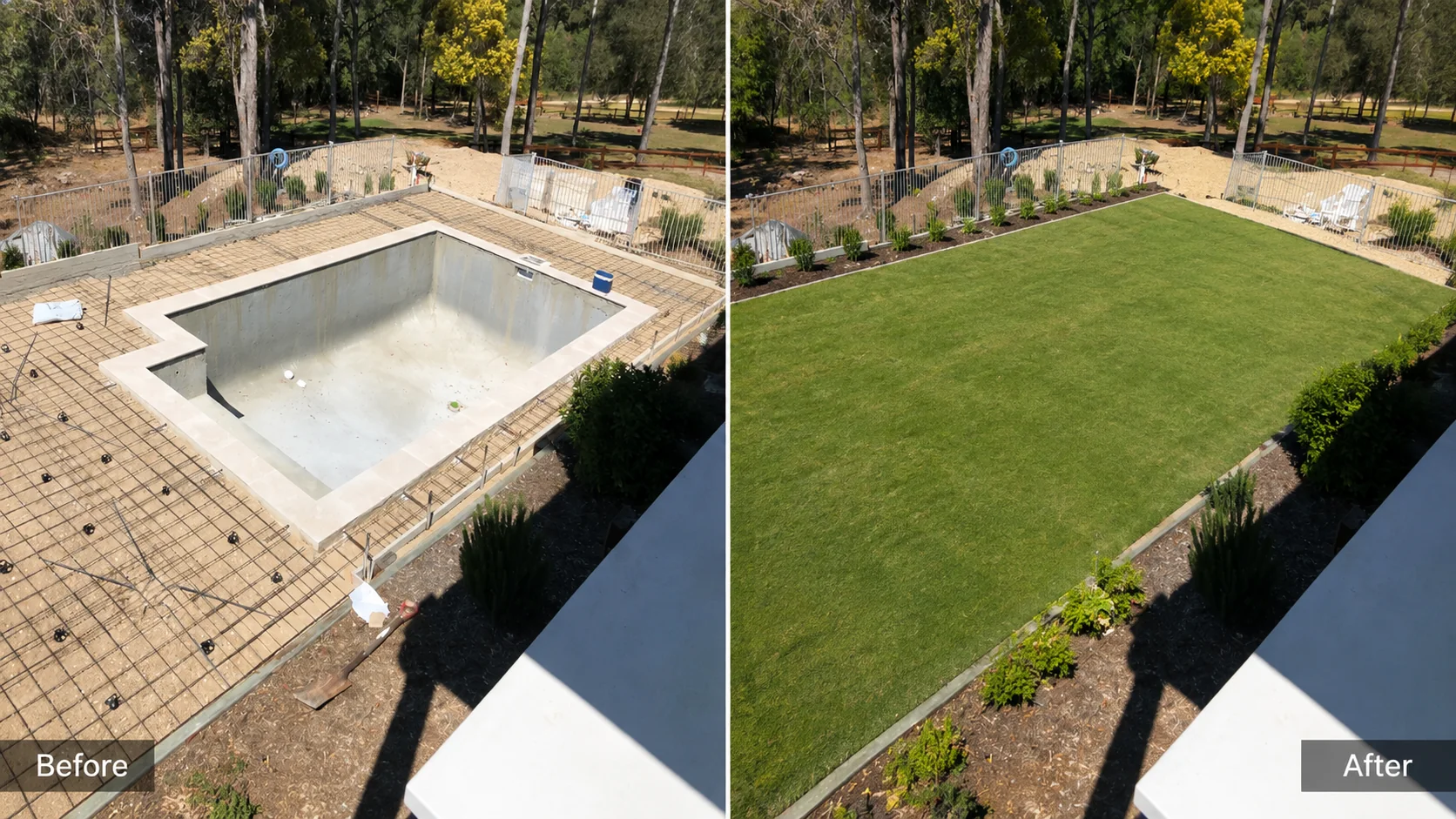
Choosing fill material
The material should be suitable for the project and free from inappropriate waste. Different layers or finishing materials may be used depending on compaction targets, drainage and whether the surface will become lawn, gardens or paving.
Layer placement and compaction
Large volumes tipped in one lift can settle unpredictably. A planned process places fill in manageable layers and compacts it using equipment suited to the material and available access.
Managing water
Groundwater, rain, existing pool drainage and runoff from surrounding paving can affect the site. Drainage decisions should be made before the final levels are established.
Finishing the surface
Topsoil, turf, garden beds, paving subbase or other surface preparation is completed after the structural fill stage. The finish should allow for drainage away from buildings and neighbouring properties.
Questions to ask before accepting a quote
- What removal method is included and what will remain below ground?
- Which approvals, licences, inspections or specialist reports apply?
- How will waste, fill, drainage and compaction be handled?
- What access assumptions and exclusions are built into the price?
- What documents and photographs will be provided at completion?
- QBCC guidance on deregistering and lawfully decommissioning a pool
- Business Queensland information about demolition licensing
Approval and licensing requirements vary. A building certifier, council and the proposed contractor should confirm the requirements for the property.
Ready to discuss the pool?
Send the pool type, suburb, access and photos for an initial project review.